

03.26 March Review


🧠 Rewire Your Product Team (and your brain!)
This is a guest article by Esra Yetis
We talk a lot about Agile teams and continuous improvement in the Product world. We obsess over velocity, shipping features, and optimising operations.
But let’s be honest, most product teams aren’t ‘continuously improving’. Instead, they become continuously trapped in an endless loop of sprints. Running from one cycle to the next, making the exact same mistakes, just faster.
And this isn’t just a workplace issue. Have you noticed how we do the exact same thing in our individual lives? We get trapped in our own personal loops. Rushing from one meeting, one major career decision, or one tough conversation to the next, never actually taking a breath to process what just happened.
Why? Have we completely lost the ability to stop and reflect?
Today, I want to share a framework with you that will fundamentally change how you lead. It is a tool that will not only improve your retrospectives but also make you a better leader, and honestly, a better partner and friend in your personal life too!
It is the practice of Critical Reflection.
And here is a warning: this is not something you can unlearn. Once you start practising this, it becomes a permanent habit. You will start seeing these patterns in your meetings, in your 1:1s, and at your dinner table.
The Engine: Gibbs’ Reflective Cycle
We encounter many different scenarios at work and in our personal lives as we grow. But experience alone doesn’t teach you anything! It is reflecting on your experience that actually drives growth.
I’ve found that to do this effectively, you need a structured framework. The gold standard is Gibbs’ Reflective Cycle. (While I use Gibbs here, there are other fantastic, well-known models with similar DNA, such as Kolb’s Experiential Learning Cycle and Borton’s “What, So What, Now What?” model. The specific framework matters less than building the habit!)
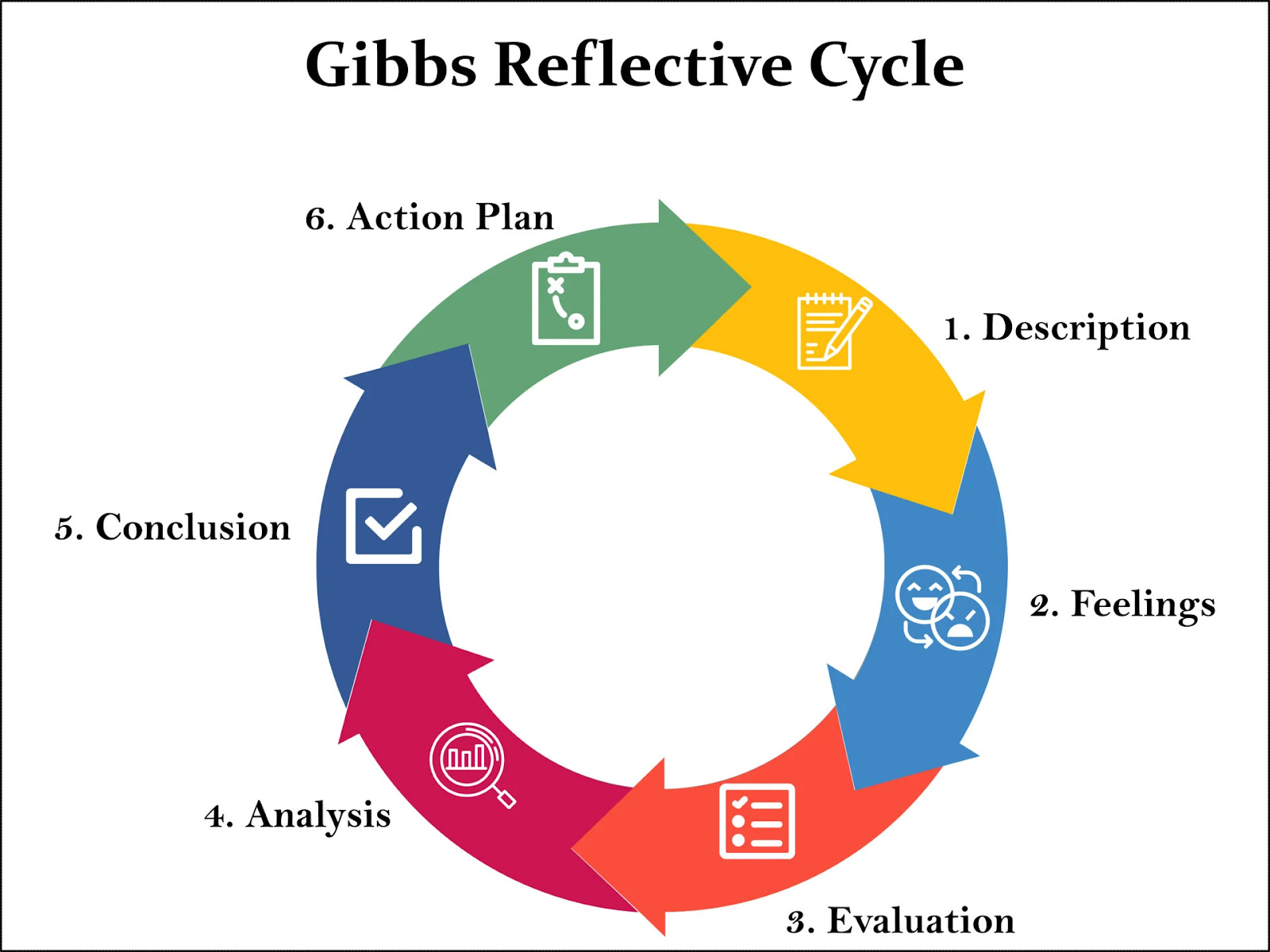
It’s a 6-step loop to process any event, failure, or success:
Description: What objectively happened?
Feelings: What were you thinking and feeling?
Evaluation: What was good and bad about the experience?
Analysis: Why did things happen that way?
Conclusion: What else could you have done?
Action Plan: If it happens again, what will you do differently?
It really is a brilliant framework. But still, I’ve found that even the most well-intentioned product teams (and individuals) often miss the bigger picture. We live in a world that feels like a race, where we have to get a lot done so quickly that it is incredibly easy to skip crucial steps. It isn’t that people are consciously and actively getting it wrong, it’s simply down to a lack of awareness and practice.
Whether you are running a post-mortem with your engineering squad or driving home, replaying a frustrating conversation in your head, you have to watch out for these Three Traps I see people fall into over and over again.
Trap 1: The Venting Trap
The Symptom: All emotion, zero analysis.
A team will describe the failed launch (Step 1) and then move to Feelings (Step 2). And they stay there. They sit with the frustration, anger, or annoyance of a missed deadline. They treat the retrospective like a group therapy session.
But as Mel Robbins brilliantly highlights in this quick video, venting is actually a massive trap. According to a study from Ohio State University, when you vent and replay the drama over and over, you’re not releasing the anger, you’re simply reinforcing it. Feeling your emotions is of course valid, but sitting in those emotions without moving into Analysis (Step 4) just hardwires the frustration. It changes nothing.
Trap 2: The Process Trap
The Symptom: All analysis, zero action.
This is the team that successfully navigates the emotions and conducts a brilliant Analysis. They figure out exactly why something failed. They write a beautifully formatted, pages-long post-mortem document in Confluence. But they never consider the Conclusion or create an Action Plan (Steps 5 & 6).
This is a classic example of what Stanford researchers Jeffrey Pfeffer and Robert Sutton famously coined the “Knowing-Doing Gap.“ In their research, they highlight how organisations are phenomenal at gathering data and writing reports, but terrible at actually translating that knowledge into execution. Without an action plan, your deep analysis is just a document that no one will ever read or act on.
Trap 3: The Reaction Trap
The Symptom: All action, zero analysis.
This happens when a team experiences a failure, panics, and immediately jumps from Step 1 directly to Step 6. They completely bypass emotions, skip deep analysis, and just implement a fix. They believe that if they move quickly, they will make progress.
This is called “Action Bias.” Research shows that when faced with a problem, humans have a psychological urge to do something (anything!) because taking action makes us feel in control, even if that action is counterproductive. But when you implement a solution without actually understanding why the system broke in the first place, that solution will inevitably fail.
So what does leadership do? They react again. Another new tool, another new process. Suddenly, your team is trapped in a doom-loop corporate version of whack-a-mole. This sounds like a nightmare.
Building the Reflection Engine
In a world obsessed with speed, taking time to pause and reflect feels like a luxury or a waste of time. In fact, the cost of not taking time to reflect properly is far higher.
Whether you are a Product Manager trying to align a fractured engineering squad, or simply trying to have a better conversation with your spouse after a long day, the rules are the same:
Don’t just vent. Don’t just intellectualise. And don’t just react.
Run the cycle. Process the feeling, analyse the root cause, commit to an action plan, observe and start your cycle again. Once you develop this muscle, it will come very naturally to you.
Your challenge for this week: Take one recent friction point, a bad meeting, a missed handoff, or a tough conversation, and run it through all 6 steps of the Gibbs cycle on a single piece of paper. See what happens.
Until next time,
Esra
esrayetis.com
🎤 Upcoming Events
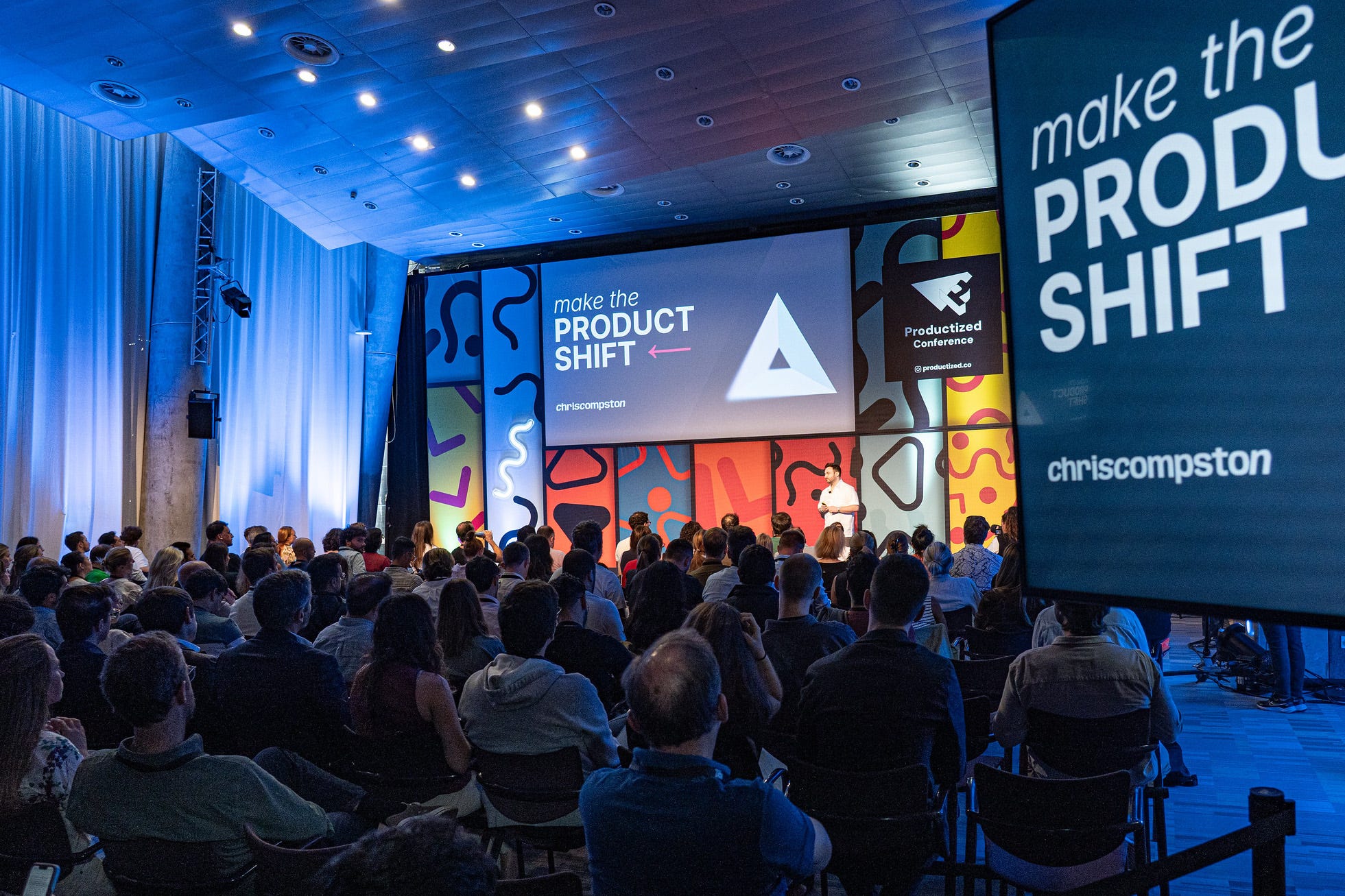
🌍 Product Academy May 7th - ‘Make the Product Shift’ half-day workshop
🇭🇷 Productworld May 8th - ‘Make the Product Shift’ opening keynote
🇹🇷 BAUX Istanbul May 12th - ‘Make the Product Shift’ keynote
I’m available throughout 2026 to speak at your organisation, conference, podcast or masterclass webinar, contact me on hey@chriscompston.com
📚 From the Reading List

👩🏽🚀 Product Careers
New roles at Monzo, Manual, Pion and more …
Director of Product Operations / Strategy & Operations Manager / Product Operations Manager, Payments & Open Banking / Lead Product Manager / Head of Digital Delivery / Principal Product Manager / Senior Product Operations Manager
🤩 And finally …
Just some of the great conversations I’ve been having;
Hugo Froes, Phil Hornby, Katie Hudson, Yi-Hsuan Lin, Zoltan Patai, Andrei Cosmin Munteanu, Sheen Yap, Amanda Colpoys, Andy Greenhalgh, Chiara Gardner, Aly Mahan, Gerisha Nadaraju, Rebekah Carere, Katja Starks, Bronwyn Allanson, Stephen Edwards and Terry Courtney
Fancy a chat? Book some time with me at chriscompston.com/letschat
 | A guest post by
|